Name(s): Smith, Harlan Ingersoll, 1872-1939
Description: Partially restored site of Gitladzok, the fortress of the Gitselasu tribe in the Kitselas Canyon. Many of the poles have been re-erected and stabilized by Harlan I. Smith for the National Museum of Canada and the CN Railroad. This is an early example of a Native tourist attraction based on the preservation of totem poles.
Date: 1926
Name(s): Barbeau, Marius, 1883-1969
Description: Chief Gaum's house at Gitladzawk. Site restoration and pole re-erection was taking place as a part of a National Museum of Canada project
Date: 1927
Name(s): Smith, Harlan Ingersoll, 1872-1939
Description: Site restoration and pole re-erection was taking place as a part of a National Museum of Canada project.
Date: 1927
Name(s): Smith, Harlan Ingersoll, 1872-1939
Description: The re-erected poles and posts of Gitladzawk. The restoration of the poles was initiated by the Canadian Museum of Man and the CN Railway.
Date: 1927
Name(s): Smith, Harlan Ingersoll, 1872-1939
Description: Re-erecting the poles. On the left is Whole Being Pole, leaning against the house frame is the Beaver Pole and the tall pole behind is the On-it-Sleep Raven Pole.
Date: 1909
Name(s): Smith, Harlan Ingersoll, 1872-1939
Description: Whale house retaining walls. The lower has the "Man cooking Eels" motif on it.
Date: 1972
Name(s): MacDonald, George F.
Description: A fallen ridge beam is all that remains of this house.
Date: 1933
Name(s): Barrow, F. J.
Description: This is a very old house post from Gwayi. It was carved around the turn of the 20th century. The figure has a drum like form carved on its belly. Its hands held up the ridge beam of a house.
Date: 1967
Name(s): De Menil, Adelaide
Description: Old ridge beams of longhouse
Date: 1966
Name(s): De Menil, Adelaide
Description: House post inside Chief Shakes' X'átgu Hít (Mudshark House). This post was carved by Kadjisdu.axtc and possibly represents a Shaman.
Date: 1980 to 1985
Description: Ringbolt attached to the rocks at Ringbolt island. Ringbolts were attached to the island to help sternwheelers winch themselves throught the Canyon. Stern wheelers or paddle wheelers were the main mode of transportaion in the Canyon before the Grand Trunk Pacific rail line was built.
Date: 1980 to 1985
Description: Whirlpools and eddies in the Kitselas Canyon.
Date: 2008
Name(s): MacDonald, George F.
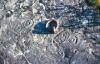
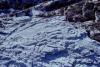
Description: Ringbolt Island is the location of five seperate petroglyphs. It is most likely that the petroglyphs in the Kitselas Canyon aree associated with shamanism. A shaman is a religious specialist and healer whose primary function is to cure people. Shamanic activity was carried out away from village sites and was very closely associated with notioins of transformation.
Date: 1971
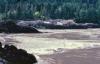
Description: View of the bank of the Skeena River and site of Gitlaxdzawk
Date: 1980 to 1985
Description: Petroglyphs at the Kitselas Canyon.These photos were taken by Morris Mason, Dave Walker and Gary Coupland during archaeological surveys and digs in the early 1980s